
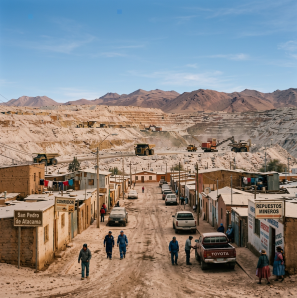
Mining is both an economic lifeline and a source of lasting pressure for rural Nevada. From gold operations in Elko County to emerging lithium projects such as Thacker Pass, mines bring high wages, tax revenue, and investment to communities that often receive little benefit from Nevada’s tourism-driven urban economy—but they also test local water supplies, housing, infrastructure, and ecosystems.
An economic backbone
For many rural counties, mining is not simply one industry among many; it is the foundation of local employment and public budgets. A 2023 report cited by the Nevada Independent found that Nevada mining workers earned an average of $125,848 annually, far above the statewide average of $55,490 across all sectors.
The industry’s reach extends beyond mine sites. Industry advocates estimate that each mining job supports roughly four additional jobs in businesses that supply equipment, food, transportation, construction, and other services. Mining also contributes roughly 6% of Nevada’s GDP and supports more than 40,000 direct and indirect jobs statewide, according to a 2026 industry-linked report.
What rural towns gain
When a mine opens or expands, the immediate benefits are visible: higher-paying jobs, a broader tax base, new business for local suppliers, and sometimes direct company investment in schools, roads, or emergency services.
The coming wave of lithium development illustrates the scale of potential change. Thacker Pass, in Humboldt County, is expected to employ close to 2,000 people during construction, while the Rhyolite Ridge project could substantially increase employment in Esmeralda County, which has fewer than 800 residents.
Projected fiscal benefits can be significant. One estimate projects Humboldt County would receive about $6.5 million annually during Thacker Pass construction and $26.5 million annually during operations, largely from sales taxes on purchased materials. Ioneer has estimated that Rhyolite Ridge could contribute $300 million to $700 million to county coffers and $110 million to $250 million to the local school district over a 60-year mine life.
The strain on small communities
Those gains arrive in places with limited capacity to absorb them. Rural towns such as Elko, Tonopah, and Ely already face housing shortages, and a sudden influx of hundreds of workers can push rents up, lengthen commutes, and make it harder for employers to retain staff. Local governments face a timing problem as well: they may need to pay for roads, schools, law enforcement, and emergency response before mine tax revenue fully materializes. Critics argue that company contributions, while helpful, do not always cover the full public cost of rapid growth.
Water, land, and pollution
The environmental stakes are especially high in Nevada’s dry Great Basin landscape. Mining can consume substantial water, and historic practices left a legacy of contaminated soil and waterways; the Nevada Department of Conservation and Natural Resources notes that early operators often dumped mine tailings into surface drainages, sending pollution downstream.
The Comstock era remains a cautionary example. Mine waste introduced mercury into the Carson River system, where it moved through water, soil, plants, and animals; fish in the drainage have been found with toxic mercury levels, leading many residents to avoid eating them. Modern operations are more regulated, but risks persist. Open-pit mines alter large landscapes, generate dust and hazardous air pollutants, and can create long-term water-treatment obligations after closure. Environmental advocates note that hardrock mining can pollute water for thousands of years, raising questions about who pays for cleanup once a mine is gone.
Lithium changes the debate
Nevada’s mining story is expanding beyond gold and copper. Demand for electric-vehicle batteries has made lithium central to the state’s future, positioning rural Nevada as a potential supplier for the clean-energy economy. That creates a difficult trade-off. Lithium projects promise jobs and revenue in communities that need both, but they also raise familiar concerns about water use, habitat disturbance, tribal and cultural sites, and whether rural residents will share fairly in the benefits.
Finding a durable balance
The central question for rural Nevada is not simply whether mining should continue, but under what conditions. A durable approach would require: Early, binding funding for housing, schools, roads, and emergency services before major workforce growth begins.
Strong water monitoring, closure bonds, and long-term treatment plans that protect downstream communities. Local hiring, supplier development, and revenue-sharing so benefits remain in the counties bearing the impacts.
Meaningful consultation with tribes, ranchers, conservationists, and residents before projects are approved. Mining has helped build Nevada, and it still sustains many rural families. But its future legitimacy will depend on whether the state can capture the economic upside without repeating the environmental and fiscal burdens of its mining past.
Leave a Reply